
Building a Robust Retirement Plan: Key Steps to Secure Your Financial Future
Retirement might seem like a distant dream when you’re caught up in the daily grind of work, bills, and life’s endless responsibilities. Yet, the decisions you make today about your retirement planning will determine whether your golden years are truly golden or filled with financial stress. The truth is, building a robust retirement plan isn’t just about setting aside money—it’s about creating a comprehensive strategy that adapts to your changing needs and market conditions.
Whether you’re just starting your career or you’re already in your 40s wondering if it’s too late to begin serious retirement planning, this guide will walk you through the essential steps to build a retirement plan that can weather economic storms and provide the security you deserve. The key is understanding that retirement planning is a marathon, not a sprint, and every step you take today brings you closer to financial independence.
Understanding Your Retirement Needs and Goals
Before diving into investment strategies and savings accounts, you need to paint a clear picture of what retirement looks like for you. This isn’t just about the financial numbers—though those are crucial—it’s about envisioning the lifestyle you want to maintain when you’re no longer earning a regular paycheck.
Start by asking yourself some fundamental questions: Do you want to travel extensively, or are you content staying close to home? Will you downsize your living situation, or do you plan to age in place? Are there hobbies or activities you’ve always wanted to pursue but never had time for? These lifestyle choices will significantly impact how much money you’ll need in retirement.

Financial experts often recommend planning for 70-90% of your pre-retirement income to maintain your current standard of living. However, this rule of thumb doesn’t account for individual circumstances. Some retirees find they need more money due to increased healthcare costs or travel plans, while others discover they can live comfortably on less because their mortgage is paid off and work-related expenses have disappeared.
Take time to calculate your expected expenses in retirement, including housing, healthcare, food, transportation, and entertainment. Don’t forget to factor in inflation, which can significantly erode purchasing power over time. A cup of coffee that costs $3 today might cost $5 or more by the time you retire, depending on how far away retirement is.
Starting Early: The Power of Compound Interest
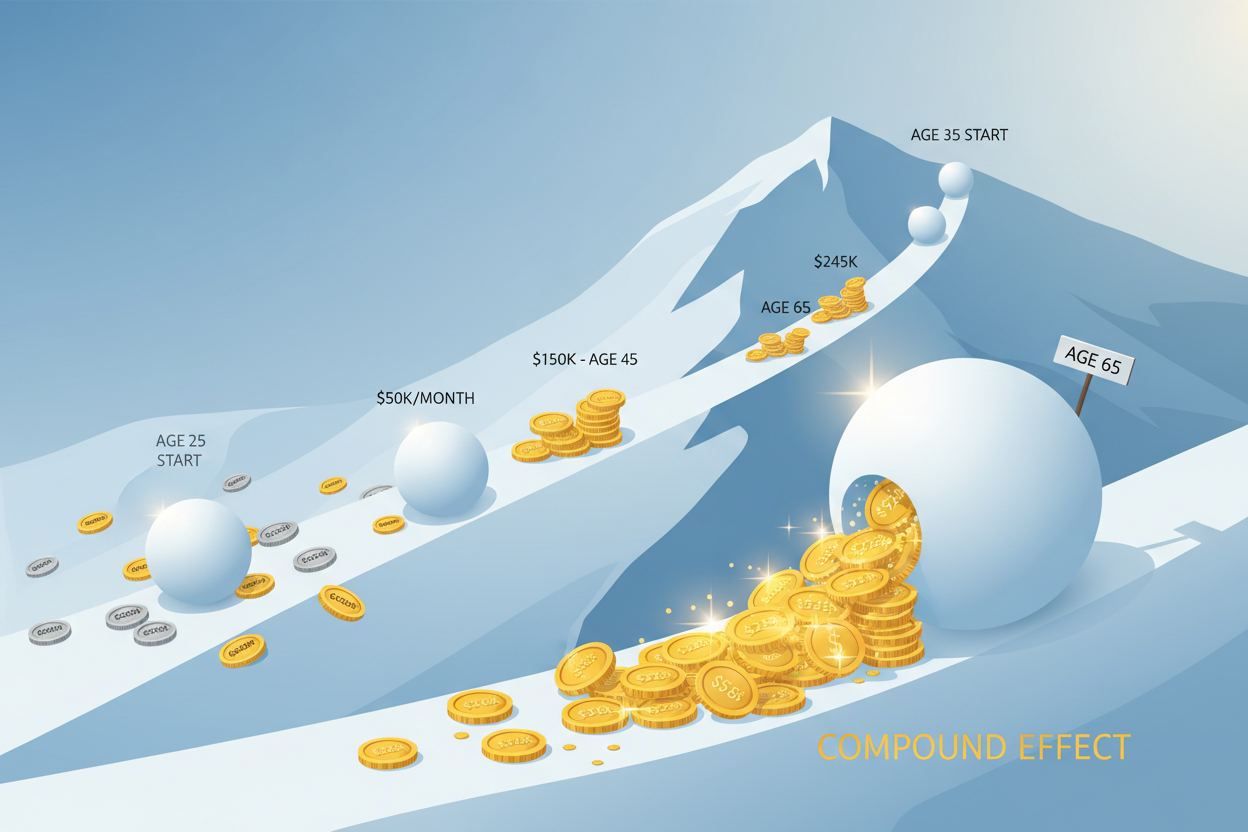
If there’s one piece of retirement advice that financial advisors universally agree on, it’s this: start as early as possible. The reason is simple yet powerful—compound interest. Albert Einstein allegedly called compound interest the eighth wonder of the world, and when it comes to retirement planning, he wasn’t wrong.
Compound interest means you earn returns not just on your original investment, but also on the returns that investment generates over time. This creates a snowball effect that becomes more pronounced the longer your money has to grow. For example, if you start investing $200 per month at age 25 with an average annual return of 7%, you’ll have approximately $525,000 by age 65. Wait until age 35 to start, and that number drops to about $245,000—less than half, despite only waiting ten years.
Even if you can only contribute small amounts initially, starting early gives your money the maximum time to grow. You can always increase your contributions as your income rises throughout your career. The key is developing the habit of consistent saving and letting time work in your favor.
For those who feel they’ve started “too late,” don’t despair. While starting early provides advantages, it’s never too late to begin building a retirement plan. You might need to save more aggressively or work a few years longer than someone who started earlier, but a secure retirement is still achievable with the right strategy and commitment.
Maximizing Employer-Sponsored Retirement Plans
If your employer offers a retirement plan like a 401(k), this should typically be your first stop in retirement planning. These plans offer several advantages that make them incredibly valuable tools for building retirement wealth.
The most compelling reason to participate in your employer’s plan is the potential for employer matching contributions. This is essentially free money—your employer contributes additional funds to your retirement account based on how much you contribute. A common matching formula might be 50 cents for every dollar you contribute, up to 6% of your salary. If you’re not contributing enough to get the full match, you’re leaving money on the table.
Beyond the matching contributions, employer-sponsored plans offer tax advantages that can significantly boost your retirement savings. Traditional 401(k) contributions are made with pre-tax dollars, reducing your current taxable income. The money grows tax-deferred until you withdraw it in retirement, when you’ll likely be in a lower tax bracket. Some employers also offer Roth 401(k) options, where you contribute after-tax dollars but enjoy tax-free growth and withdrawals in retirement.
Most employer plans also offer automatic features that can help you stay on track. Automatic enrollment gets you started even if you haven’t taken action yourself, while automatic escalation gradually increases your contribution rate over time, often coinciding with salary raises so you barely notice the difference in your take-home pay.
When choosing investments within your employer plan, focus on low-cost, diversified options. Many plans offer target-date funds that automatically adjust your investment mix as you approach retirement, becoming more conservative over time. While these aren’t perfect for everyone, they provide a reasonable default option for investors who don’t want to actively manage their portfolios.
Individual Retirement Accounts: IRAs and Roth IRAs
Individual Retirement Accounts (IRAs) are another crucial component of a robust retirement plan. Even if you have access to an employer-sponsored plan, IRAs can provide additional tax-advantaged savings opportunities and more investment flexibility.
Traditional IRAs work similarly to traditional 401(k)s—you may be able to deduct contributions from your current taxes, the money grows tax-deferred, and you pay taxes on withdrawals in retirement. However, income limits may restrict your ability to deduct contributions if you also participate in an employer plan.
Roth IRAs offer a different tax approach that can be particularly attractive for younger workers or those who expect to be in a higher tax bracket in retirement. You contribute after-tax dollars, but all growth and qualified withdrawals in retirement are tax-free. Roth IRAs also don’t have required minimum distributions during your lifetime, making them excellent estate planning tools.
The annual contribution limits for IRAs are lower than 401(k)s, but they still provide valuable additional savings capacity. For 2024, you can contribute up to $7,000 to an IRA, or $8,000 if you’re 50 or older. These catch-up contributions recognize that older workers need to save more aggressively as retirement approaches.
One significant advantage of IRAs is investment flexibility. While employer plans often limit you to a menu of mutual funds, IRAs typically allow you to invest in individual stocks, bonds, ETFs, mutual funds, and even alternative investments like real estate investment trusts (REITs). This flexibility allows you to create a more customized investment strategy aligned with your risk tolerance and goals.
Diversifying Your Investment Portfolio
A robust retirement plan requires more than just saving money—it demands smart investing. Diversification is one of the most important principles in retirement investing, helping to manage risk while positioning your portfolio for long-term growth.
Diversification means spreading your investments across different asset classes, sectors, and geographic regions to reduce the impact of poor performance in any single area. A well-diversified retirement portfolio typically includes a mix of stocks, bonds, and potentially alternative investments like real estate or commodities.
Stocks historically provide the best long-term growth potential, making them essential for building retirement wealth. However, they also come with higher volatility, which can be nerve-wracking, especially as you approach retirement. The general rule of thumb is to subtract your age from 100 to determine the percentage of stocks in your portfolio. So a 30-year-old might hold 70% stocks, while a 60-year-old might hold 40%.
Bonds provide stability and income, acting as a counterbalance to stock volatility. While bond returns are typically lower than stocks over long periods, they can provide steady income and help preserve capital during market downturns. As you approach retirement, gradually increasing your bond allocation can help protect your portfolio from major losses when you have less time to recover.
International diversification is also important, as it provides exposure to growth opportunities in other countries and can help reduce overall portfolio risk. Consider allocating 20-30% of your stock holdings to international markets through broad-based international index funds.
Rebalancing your portfolio periodically ensures your asset allocation stays aligned with your goals and risk tolerance. Market movements can cause your portfolio to drift from your target allocation, so reviewing and adjusting your holdings annually or when they deviate significantly from your targets helps maintain your desired risk level.
Planning for Healthcare Costs in Retirement
Healthcare represents one of the largest and most unpredictable expenses in retirement, yet it’s often overlooked in retirement planning. According to recent estimates, a 65-year-old couple retiring today may need approximately $300,000 to cover healthcare costs throughout retirement—and that doesn’t include long-term care expenses.
Medicare provides important healthcare coverage for retirees, but it doesn’t cover everything. Medicare Part A covers hospital stays, Part B covers doctor visits and outpatient services, and Part D covers prescription drugs. However, there are deductibles, copayments, and coverage gaps that can result in significant out-of-pocket expenses. Many retirees purchase Medigap insurance to help cover these gaps, which adds to overall healthcare costs.
Long-term care is another major consideration that Medicare doesn’t adequately address. Whether it’s in-home care, assisted living, or nursing home care, long-term care services are expensive and becoming more so. The average cost of a private room in a nursing home exceeds $100,000 per year in many areas, and these costs continue rising faster than general inflation.
Health Savings Accounts (HSAs) offer a unique opportunity to save for healthcare expenses in retirement while providing immediate tax benefits. If you have access to a high-deductible health plan, you can contribute to an HSA and receive a tax deduction for contributions. The money grows tax-free, and withdrawals for qualified medical expenses are also tax-free. After age 65, you can withdraw HSA funds for non-medical purposes without penalty, though you’ll pay regular income tax on those withdrawals.
Consider long-term care insurance as part of your retirement planning, especially if you have significant assets to protect. While the premiums can be substantial, long-term care insurance can help preserve your retirement savings and provide peace of mind. Some life insurance policies also offer long-term care benefits, providing flexibility in how you address this risk.
Creating Multiple Income Streams
A truly robust retirement plan doesn’t rely on a single source of income. Creating multiple income streams provides security and flexibility, reducing your dependence on any one source and helping ensure you can maintain your lifestyle even if one income source disappears or underperforms.
Social Security forms the foundation of retirement income for most Americans, but it was never designed to be the sole source of retirement funding. The average Social Security benefit replaces only about 40% of pre-retirement income, and the program faces long-term funding challenges that could result in benefit reductions if Congress doesn’t act.
Understanding how Social Security works can help you maximize your benefits. Your benefit amount is based on your highest 35 years of earnings, so working longer and earning more can increase your monthly payments. You can start claiming benefits as early as age 62, but doing so permanently reduces your monthly payments. Waiting until your full retirement age provides your full benefit amount, and delaying benefits until age 70 can increase your monthly payments by up to 32%.
Beyond Social Security and your retirement accounts, consider developing additional income sources. This might include rental real estate, dividend-paying stocks, part-time work in retirement, or a small business. Some retirees discover that consulting in their former field provides both income and intellectual stimulation.
Passive income sources are particularly attractive because they don’t require ongoing work. This might include dividend stocks, real estate investment trusts (REITs), or peer-to-peer lending. While these investments carry risks, they can provide steady income streams that help reduce the pressure on your retirement account withdrawals.
Regular Review and Adjustment of Your Plan
Building a robust retirement plan isn’t a one-time activity—it requires ongoing attention and periodic adjustments. Life changes, market conditions shift, and your goals may evolve, all of which can impact your retirement strategy.
Plan to review your retirement strategy at least annually, or whenever you experience major life changes like marriage, divorce, job changes, or health issues. During these reviews, assess whether you’re on track to meet your retirement goals, evaluate your investment performance, and consider whether your asset allocation still makes sense given your age and risk tolerance.
Pay attention to fees and expenses in your retirement accounts, as these can significantly impact your long-term returns. High fees can cost you tens of thousands of dollars over time, so look for low-cost investment options whenever possible. Many employers are improving their 401(k) plan options, so periodically review your plan’s investment menu for better choices.
Don’t forget to update your beneficiaries on all retirement accounts and insurance policies. Life changes like marriage, divorce, or the birth of children should prompt beneficiary updates to ensure your assets go where you intend.
Consider working with a financial advisor, especially as your retirement planning becomes more complex or as you approach retirement. A good advisor can help you navigate tax strategies, estate planning, and withdrawal strategies that maximize your retirement income while minimizing taxes.
Conclusion: Taking Action Toward Your Retirement Goals
Building a robust retirement plan requires commitment, patience, and ongoing attention, but the peace of mind and financial security it provides are invaluable. The key is to start where you are with what you have, rather than waiting for the “perfect” time or amount to begin.
Remember that retirement planning is highly personal—what works for your neighbor or colleague might not be the best approach for your situation. Focus on the fundamentals: start early if possible, maximize employer benefits, diversify your investments, plan for healthcare costs, and create multiple income streams. Most importantly, take action today, even if it’s just opening an IRA or increasing your 401(k) contribution by one percentage point.
Your future self will thank you for the steps you take today toward building a secure and comfortable retirement. The journey to financial independence isn’t always easy, but with a solid plan and consistent execution, you can create the retirement you’ve always envisioned. Don’t let another year pass without making progress toward your retirement goals—your financial future depends on the actions you take today.