
Professional Financial Guidance: Achieving Career and Financial Goals
Picture this: you’re sitting at your kitchen table on a Sunday evening, staring at a pile of bills and wondering how you’ll ever afford that dream vacation, let alone retirement. Sound familiar? You’re not alone. Millions of people struggle to balance their career ambitions with their financial realities, often feeling overwhelmed by the sheer complexity of modern financial planning.
The truth is, achieving both career success and financial security doesn’t have to be a pipe dream. With the right professional financial guidance, you can create a roadmap that aligns your career trajectory with your financial aspirations. Whether you’re just starting your professional journey or looking to make significant changes mid-career, understanding how to leverage expert advice can be the difference between financial stress and financial freedom.
In today’s rapidly evolving economy, the intersection of career planning and financial strategy has never been more critical. From navigating student loan debt to planning for retirement in an uncertain economic climate, the decisions you make today will shape your financial future for decades to come.
Understanding the Connection Between Career and Financial Success
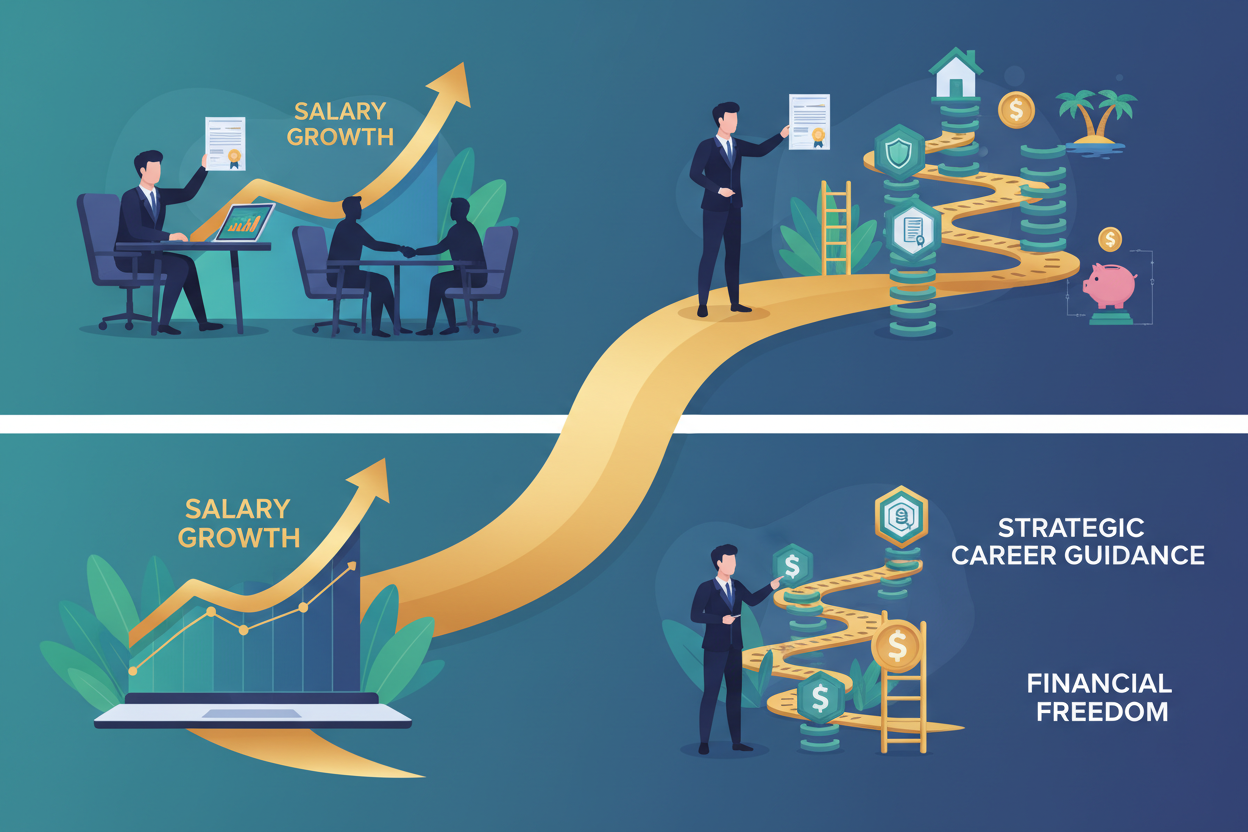
Your career isn’t just about finding fulfilling work – it’s the primary engine driving your financial future. The relationship between career choices and financial outcomes is more nuanced than simply earning a high salary. Professional financial advisors understand that sustainable wealth building requires a holistic approach that considers your earning potential, career longevity, industry trends, and personal values.

Consider Sarah, a talented graphic designer who loved her creative work but struggled to make ends meet as a freelancer. Through professional financial guidance, she learned to price her services strategically, diversify her income streams, and eventually transition into a higher-paying corporate role while maintaining her creative side projects. The key wasn’t abandoning her passion but finding ways to make it financially sustainable.
Financial professionals help you understand that career decisions have long-term financial implications. That graduate degree might require significant upfront investment, but it could dramatically increase your lifetime earning potential. Similarly, choosing between a startup opportunity and a stable corporate job involves weighing immediate financial security against potential long-term gains.
The Role of Professional Financial Advisors in Career Planning
Professional financial advisors bring a unique perspective to career planning that goes beyond traditional career counseling. They analyze your financial situation through multiple lenses: current income and expenses, debt obligations, investment opportunities, tax implications, and long-term wealth-building strategies.
A skilled financial advisor doesn’t just tell you to save more money – they help you understand how your career choices impact your ability to achieve specific financial milestones. They might recommend pursuing certain certifications that could boost your earning potential, suggest negotiation strategies for salary increases, or help you evaluate job offers based on total compensation packages rather than just base salary.
These professionals also bring objectivity to emotional financial decisions. When you’re passionate about a career change that might involve a temporary pay cut, a financial advisor can help you model different scenarios and determine whether the transition is financially feasible given your goals and timeline.
Setting SMART Financial Goals Aligned with Career Objectives
One of the most valuable services professional financial guidance provides is helping you set realistic, measurable goals that align with your career trajectory. The SMART goal framework – Specific, Measurable, Achievable, Relevant, and Time-bound – becomes particularly powerful when applied to the intersection of career and financial planning.
Instead of vague aspirations like “make more money” or “be financially secure,” professional guidance helps you define specific targets. For example, “increase my annual income by 25% within three years through a combination of skill development, networking, and strategic job changes” or “build an emergency fund equal to six months of expenses while pursuing my MBA part-time.”
Professional advisors help you break down large goals into manageable milestones. If your ultimate goal is financial independence by age 50, they’ll work backwards to determine how much you need to save annually, what rate of return your investments need to generate, and how your career progression needs to support these targets.
The beauty of this approach is that it makes abstract financial concepts concrete and actionable. When you can see exactly how a promotion or career change impacts your timeline for buying a home or retiring comfortably, career decisions become much clearer.
Investment Strategies for Different Career Stages
Your investment strategy should evolve as your career progresses, and professional financial guidance ensures these transitions happen at the right time and in the right way. Early career professionals often benefit from aggressive growth strategies, while those approaching retirement need to focus on capital preservation.
In your twenties and early thirties, professional advisors typically recommend maximizing contributions to tax-advantaged retirement accounts, even if it means living on a tighter budget. The power of compound interest makes these early contributions incredibly valuable, and the tax benefits can actually increase your take-home pay.
Mid-career professionals face different challenges and opportunities. You might have higher income but also increased expenses from family obligations or homeownership. Professional guidance becomes crucial for balancing competing priorities: saving for children’s education, paying down mortgage debt, and continuing to build retirement savings.
As you approach peak earning years, typically in your forties and fifties, investment strategies often shift toward diversification and risk management. Professional advisors help you take advantage of higher income levels while preparing for eventual retirement. This might involve maximizing catch-up contributions to retirement accounts, exploring tax-efficient investment vehicles, or considering more sophisticated estate planning strategies.
Navigating Career Transitions and Financial Security
Career transitions – whether voluntary or involuntary – represent some of the most financially vulnerable periods in our lives. Professional financial guidance becomes invaluable during these times, helping you maintain financial stability while pursuing new opportunities.
Planned career transitions, such as going back to school or starting a business, require careful financial preparation. A financial advisor can help you model the costs and timeline, identify funding sources, and create contingency plans. They might recommend building a larger emergency fund before making the transition or suggest ways to maintain some income during the change.
Unexpected career disruptions, such as layoffs or industry downturns, test the strength of your financial foundation. Those who have worked with financial professionals often find themselves better prepared for these challenges, with adequate emergency funds, diversified income sources, and clear action plans for different scenarios.
Professional guidance also helps you evaluate new opportunities objectively. When you receive a job offer in a different city, for example, a financial advisor can help you calculate the true cost of living differences, evaluate the long-term career prospects, and determine whether the move supports your overall financial goals.
Building Multiple Income Streams Through Professional Guidance
Modern financial security increasingly depends on diversifying income sources, and professional financial advisors are excellent resources for identifying and developing these opportunities. They understand that relying solely on employment income creates vulnerability and limits wealth-building potential.
Professional guidance can help you identify income diversification strategies that align with your skills and schedule. This might involve developing consulting services based on your professional expertise, investing in dividend-paying stocks or real estate, or creating passive income through digital products or online courses.
The key is finding opportunities that complement rather than compete with your primary career. A marketing professional might develop a side business offering social media consulting to small businesses, while a teacher might create and sell educational materials online. Professional advisors help ensure these ventures support rather than distract from your main career goals.
Financial professionals also help you understand the tax implications and legal considerations of multiple income streams. They can advise on business structure decisions, help you track expenses and income properly, and ensure you’re maximizing tax benefits while staying compliant with regulations.
Long-term Wealth Building and Retirement Planning
Perhaps nowhere is professional financial guidance more valuable than in long-term wealth building and retirement planning. The complexity of modern retirement planning – with changing Social Security benefits, evolving healthcare costs, and longer life expectancies – makes professional expertise essential.
Professional advisors help you understand how your career choices impact retirement planning. They can model different scenarios: what happens if you retire early, how a career change might affect your retirement timeline, or how different savings rates impact your quality of life in retirement.
The guidance extends beyond just accumulating assets. Professional advisors help you understand withdrawal strategies, tax-efficient retirement income planning, and healthcare cost planning. They also help you coordinate retirement benefits from multiple employers and understand how Social Security timing decisions impact your overall retirement income.
For many people, the goal isn’t just traditional retirement but financial independence – the ability to choose how to spend your time without being constrained by financial necessity. Professional guidance can help you understand what financial independence looks like for your specific situation and create a roadmap to achieve it.
Conclusion
Achieving career success and financial security doesn’t happen by accident – it requires intentional planning, strategic decision-making, and often, professional guidance to navigate the complex intersection of career and financial planning. The investment in professional financial advice pays dividends not just in dollars and cents, but in peace of mind and the confidence that comes from having a clear plan.
Remember that professional financial guidance isn’t just for the wealthy or those nearing retirement. Whether you’re a recent graduate drowning in student loans or a mid-career professional looking to optimize your financial strategy, the right advisor can help you align your career trajectory with your financial goals.
The most successful people understand that financial planning and career planning are two sides of the same coin. By working with professionals who understand this connection, you can make informed decisions that support both your immediate needs and your long-term aspirations. Your future self will thank you for taking action today.
Don’t let another year pass wondering “what if.” The path to financial security and career fulfillment starts with a single step: seeking professional guidance to create a plan that works for your unique situation. Your dreams are achievable – you just need the right roadmap to get there.