
Avoiding Common Mistakes in Retirement Planning in Michigan: Your Path to Financial Security
Planning for retirement can feel overwhelming, especially when you’re navigating Michigan’s unique economic landscape. Whether you’re a Detroit autoworker, a Grand Rapids healthcare professional, or a small business owner in Traverse City, the decisions you make today will significantly impact your golden years. Unfortunately, many Michigan residents fall into predictable traps that can derail their retirement dreams.
The good news? Most retirement planning mistakes are entirely preventable with the right knowledge and approach. By understanding these common pitfalls and learning how to avoid them, you can build a more secure financial future that allows you to enjoy everything Michigan has to offer during your retirement years.
Starting Too Late: The Biggest Retirement Planning Mistake in Michigan
Perhaps the most costly mistake Michigan residents make is simply waiting too long to begin serious retirement planning. It’s easy to get caught up in immediate expenses like mortgage payments, children’s education costs, or dealing with Michigan’s variable economy. However, time is your greatest ally when it comes to building retirement wealth.
Consider this scenario: Sarah, a 25-year-old teacher in Ann Arbor, starts contributing $200 monthly to her retirement account. By age 65, assuming a 7% annual return, she’ll have accumulated over $525,000. Compare that to her colleague Mark, who waits until age 35 to start the same $200 monthly contribution. Mark will have only about $245,000 by retirement age, despite contributing for 30 years.
The power of compound interest works best over longer periods. Even if you can only contribute small amounts initially, starting early gives your money more time to grow. Michigan’s economic cycles have taught us that waiting for the “perfect time” to start saving often means missing out on years of potential growth.

Underestimating Healthcare Costs in Retirement
Healthcare expenses represent one of the most significant and unpredictable costs retirees face, and Michigan residents need to be particularly mindful of this reality. Many people assume Medicare will cover all their healthcare needs, but this assumption can lead to serious financial shortfalls.
Medicare typically covers only about 60% of healthcare expenses, leaving retirees responsible for premiums, deductibles, copayments, and services not covered by Medicare. In Michigan, where winter weather can exacerbate health conditions and where access to specialized care may require travel to major cities like Detroit or Grand Rapids, these costs can add up quickly.
A couple retiring today should expect to spend approximately $300,000 on healthcare throughout their retirement years. This figure doesn’t include long-term care, which can cost $50,000 to $100,000 annually in Michigan, depending on the level of care and location.
To address this challenge, consider contributing to a Health Savings Account (HSA) if you’re eligible. HSA contributions are tax-deductible, grow tax-free, and can be withdrawn tax-free for qualified medical expenses. After age 65, you can withdraw HSA funds for any purpose, though non-medical withdrawals are subject to income tax.
Ignoring Michigan’s Tax Implications for Retirees
Michigan’s tax structure offers both opportunities and challenges for retirees, and failing to understand these implications can cost you thousands of dollars annually. Many residents don’t realize that Michigan doesn’t tax most retirement income, including Social Security benefits, pension payments, and distributions from traditional IRAs and 401(k)s for those born before 1953.
However, the rules become more complex for younger retirees. Those born after 1952 may face taxation on certain retirement income, depending on their age and the source of the income. This makes strategic planning essential for maximizing your after-tax retirement income.
Property taxes also deserve consideration in your retirement planning. While Michigan’s property taxes are generally reasonable compared to neighboring states, they vary significantly by location. If you’re planning to stay in your current home, factor in potential property tax increases. If you’re considering relocating within Michigan, research the tax implications of different communities.
Working with a Michigan-based financial advisor or tax professional can help you navigate these complexities and develop strategies to minimize your tax burden in retirement.
Failing to Diversify Investment Portfolios
Michigan’s economy has historically been tied to the automotive industry, and many residents have learned the hard way about the importance of diversification. This lesson extends beyond just avoiding overconcentration in automotive stocks; it applies to all aspects of your retirement portfolio.
A common mistake is keeping too much money in conservative investments like CDs or savings accounts, especially during your younger working years. While these investments feel safe, they often fail to keep pace with inflation over time. Conversely, some investors take excessive risks by putting too much money in individual stocks or speculative investments.
A well-diversified portfolio should include a mix of domestic and international stocks, bonds, and possibly real estate investments. The exact allocation depends on your age, risk tolerance, and retirement timeline. As a general rule, younger investors can typically afford to take more risks for potentially higher returns, while those closer to retirement should gradually shift toward more conservative investments.
Don’t forget to rebalance your portfolio regularly. Market movements can cause your asset allocation to drift from your target, potentially exposing you to more risk than intended or limiting your growth potential.
Overlooking Social Security Optimization Strategies
Social Security benefits form the foundation of retirement income for most Americans, yet many Michigan residents make costly mistakes when it comes to claiming these benefits. The most common error is claiming benefits too early without understanding the long-term financial impact.
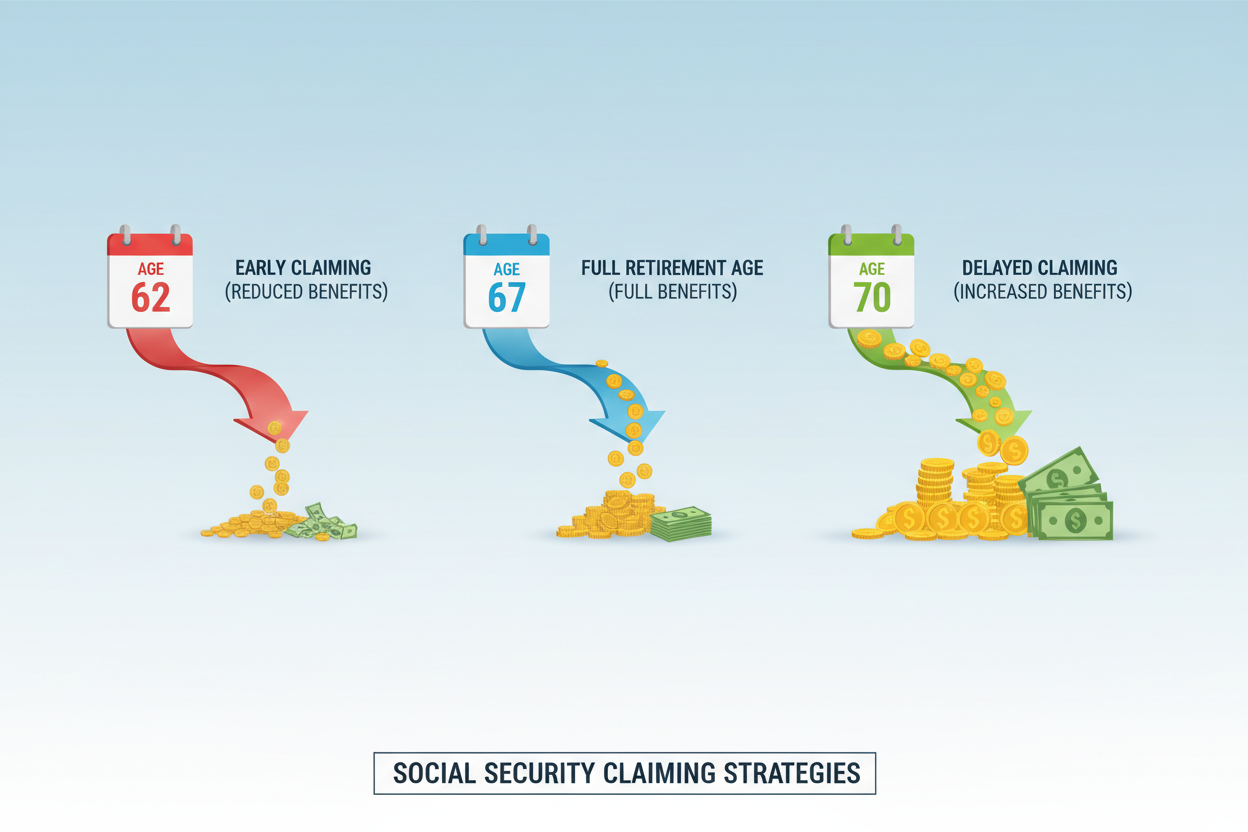
While you can begin receiving Social Security benefits as early as age 62, doing so results in permanently reduced monthly payments. For those born in 1960 or later, full retirement age is 67. Claiming benefits at 62 instead of 67 reduces your monthly benefit by about 30%. Conversely, delaying benefits until age 70 can increase your monthly payment by approximately 32% compared to claiming at full retirement age.
For married couples, the claiming strategy becomes even more complex. Spousal benefits, survivor benefits, and the timing of each spouse’s claim can significantly impact the total benefits received over both lifetimes. In many cases, it makes sense for the higher-earning spouse to delay claiming benefits while the lower-earning spouse claims earlier.
Given Michigan’s diverse economic landscape and varying income levels across different regions, it’s worth consulting with a Social Security expert or financial advisor to develop an optimal claiming strategy based on your specific situation.
Not Planning for Long-Term Care Needs
Long-term care represents one of the most significant potential expenses in retirement, yet it’s often overlooked in retirement planning. In Michigan, the cost of long-term care varies by region and type of care, but it’s substantial everywhere. Nursing home care can cost $7,000 to $10,000 monthly, while in-home care might run $20 to $30 per hour.
Many people assume their family will provide care or that Medicare will cover long-term care costs. While family support is wonderful when available, it’s not always feasible, and Medicare provides very limited long-term care coverage.
Medicaid does cover long-term care, but only after you’ve spent down most of your assets. This means you could lose your life savings and leave nothing for your spouse or children.
Long-term care insurance can help protect your assets, but it’s most affordable when purchased in your 50s or early 60s while you’re still healthy. Alternatively, some life insurance policies now include long-term care benefits, providing flexibility for different scenarios.
Inadequate Emergency Fund Planning
An emergency fund remains crucial even in retirement, yet many retirees either don’t maintain one or keep insufficient reserves. Retirees face unique challenges that make emergency funds particularly important. Unlike working-age adults who can potentially increase their income, retirees typically live on fixed incomes, making unexpected expenses more difficult to handle.
Michigan’s weather can create unexpected expenses, from furnace repairs during brutal winters to roof damage from severe storms. Healthcare emergencies, major home repairs, or the need to help adult children can all strain a retirement budget.
Financial experts typically recommend retirees maintain six to twelve months of living expenses in easily accessible accounts. This might seem like a lot of money sitting in low-yield accounts, but the peace of mind and financial flexibility it provides are invaluable.
Consider keeping your emergency fund in a high-yield savings account or money market fund that offers better returns than traditional savings accounts while maintaining liquidity.
Creating Your Michigan Retirement Success Plan
Avoiding these common retirement planning mistakes requires a proactive, comprehensive approach tailored to Michigan’s unique opportunities and challenges. Start by honestly assessing your current financial situation and retirement goals. Consider factors like where you want to live in retirement, what activities you want to pursue, and what legacy you want to leave.
Develop a written retirement plan that addresses all aspects of your financial life, including savings strategies, investment allocation, tax planning, healthcare costs, and estate planning. Review and update this plan regularly as your circumstances change.
Don’t hesitate to seek professional help. A qualified financial advisor who understands Michigan’s economic landscape and tax environment can provide valuable guidance and help you avoid costly mistakes. Look for advisors who are fee-based rather than commission-based to ensure their recommendations align with your best interests.
Remember that retirement planning is not a one-time event but an ongoing process. Stay informed about changes in tax laws, Social Security rules, and healthcare policies that might affect your retirement. Regularly review your progress and make adjustments as needed.
By understanding and avoiding these common retirement planning mistakes, you’ll be well-positioned to enjoy a comfortable, secure retirement in the Great Lakes State. Whether you’re dreaming of fishing on Lake Michigan, exploring the Upper Peninsula, or simply enjoying time with family and friends, proper planning today will help make those dreams a reality tomorrow.