
IRA vs. Roth IRA: Understanding the Tax Benefits
Planning for retirement can feel overwhelming, especially when you’re trying to navigate the maze of investment options available. Two of the most popular retirement savings vehicles are traditional IRAs and Roth IRAs, but understanding their tax benefits can make your head spin. Don’t worry – you’re not alone in feeling confused about which option might work better for your financial situation.
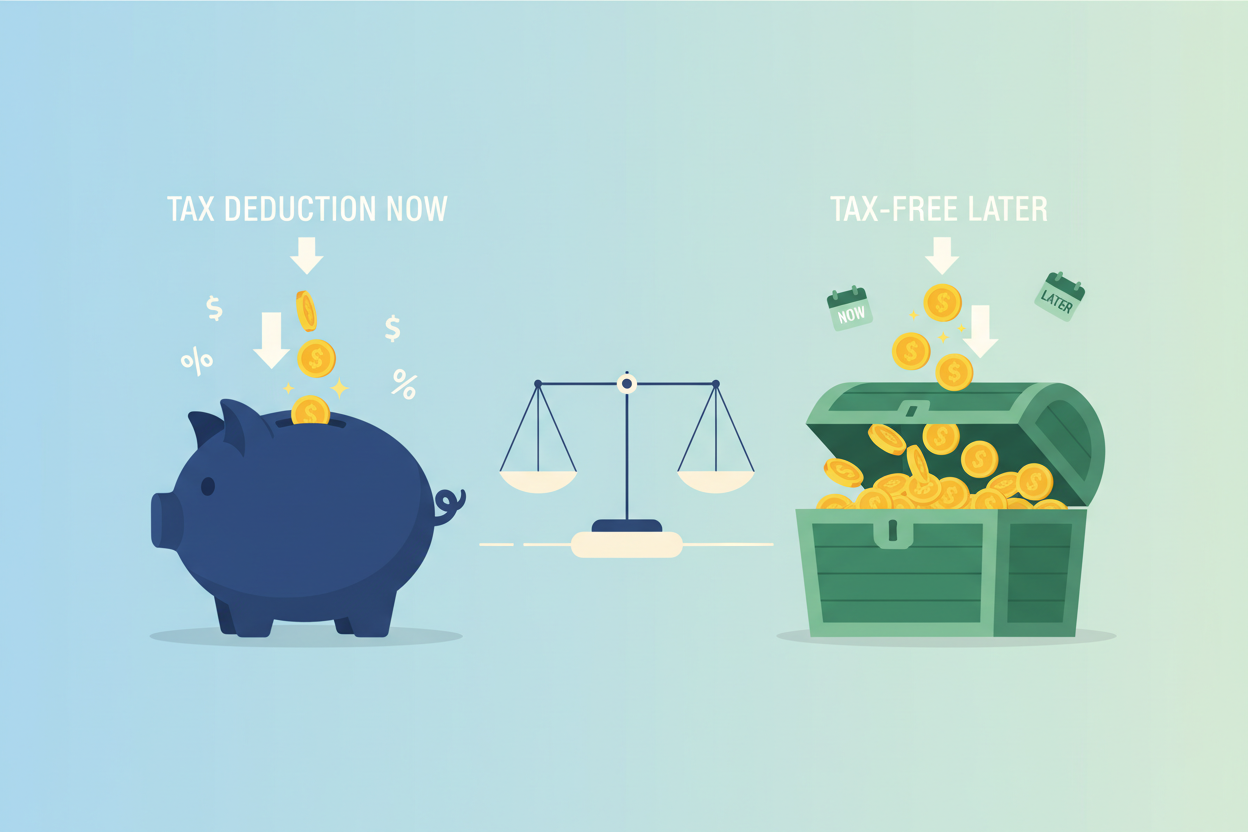
The truth is, both traditional and Roth IRAs offer significant tax advantages, but they work in completely different ways. Think of it like choosing between paying taxes now or paying taxes later – each approach has its merits depending on your current income, future expectations, and retirement timeline. Let’s break down these two powerful retirement tools so you can make an informed decision that aligns with your financial goals.

What Exactly Is a Traditional IRA?
A traditional Individual Retirement Account (IRA) is like getting a tax break today while building your retirement nest egg. When you contribute to a traditional IRA, you’re essentially telling the IRS, “I’ll pay taxes on this money later when I retire.” This upfront tax deduction can provide immediate relief on your current tax bill, which many people find appealing.
Here’s how it works: if you’re eligible, your contributions to a traditional IRA are tax-deductible in the year you make them. So if you contribute $6,000 to your traditional IRA and you’re in the 22% tax bracket, you could potentially save $1,320 on your taxes that year. Your money then grows tax-deferred until you start taking withdrawals in retirement.
However, there’s a catch – and it’s an important one. When you eventually withdraw money from your traditional IRA during retirement, those withdrawals are taxed as ordinary income. Plus, the IRS requires you to start taking minimum distributions once you reach age 73, whether you need the money or not.

Understanding the Roth IRA Advantage
A Roth IRA flips the traditional approach on its head. Instead of getting a tax break now, you pay taxes on your contributions upfront, but then enjoy tax-free growth and withdrawals in retirement. It’s like paying admission to an all-you-can-eat buffet – you pay once at the door, then everything inside is free.
With a Roth IRA, you contribute after-tax dollars, meaning you don’t get an immediate tax deduction. But here’s where it gets exciting: once your money is in the account, it grows completely tax-free. When you retire and start taking withdrawals, you won’t owe a single penny in taxes on that money, including all the growth it experienced over the years.
Another significant advantage is flexibility. Unlike traditional IRAs, Roth IRAs don’t force you to take required minimum distributions during your lifetime. You can let your money continue growing tax-free for as long as you want, making it an excellent tool for wealth transfer to your heirs.
Tax Benefits Breakdown: Traditional IRA
The tax benefits of a traditional IRA center around immediate gratification and tax deferral. When you contribute to a traditional IRA, you’re reducing your current taxable income dollar for dollar (up to contribution limits and income restrictions). This immediate tax deduction can be particularly valuable if you’re currently in a higher tax bracket.
For 2024, you can contribute up to $7,000 to a traditional IRA if you’re under 50, or $8,000 if you’re 50 or older. These contributions are typically fully deductible unless you or your spouse have a workplace retirement plan and your income exceeds certain thresholds.
The tax-deferred growth aspect means your investments can compound without the drag of annual taxes on dividends, interest, or capital gains. This can result in significantly more money accumulated over time compared to taxable investment accounts. However, remember that this is essentially a loan from the government – you’ll need to pay it back when you withdraw the funds.
Tax Benefits Breakdown: Roth IRA
Roth IRA tax benefits are all about the long game. While you don’t get an immediate tax deduction, the long-term benefits can be substantial. Your contributions grow tax-free, and qualified withdrawals in retirement are completely tax-free. This means if you contribute $6,000 annually for 30 years and your account grows to $500,000, you can withdraw that entire amount without owing taxes.
The contribution limits for Roth IRAs match traditional IRAs: $7,000 for those under 50 and $8,000 for those 50 and older in 2024. However, Roth IRAs have income limits that can phase out your ability to contribute directly. For 2024, the phase-out begins at $138,000 for single filers and $218,000 for married couples filing jointly.
One often overlooked benefit is that you can withdraw your Roth IRA contributions (not earnings) at any time without taxes or penalties. This makes Roth IRAs somewhat flexible for emergency situations, though it’s generally not recommended to raid your retirement savings.
Income Considerations and Eligibility
Your current income level plays a crucial role in determining which IRA option makes the most sense. If you’re currently in a high tax bracket but expect to be in a lower bracket during retirement, a traditional IRA might be more beneficial. You get the tax deduction now when you’re paying higher rates and pay taxes later at presumably lower rates.
Conversely, if you’re early in your career with a relatively low income but expect to earn more in the future, a Roth IRA could be the winner. You pay taxes now at your current lower rate and avoid potentially higher tax rates in retirement.
Income limits also affect your options. Traditional IRA deductibility phases out if you have a workplace retirement plan and earn too much. Roth IRA contributions are limited by income regardless of workplace plan participation. High earners might find themselves unable to contribute directly to a Roth IRA, though backdoor Roth conversions might be an option.
Age and Timeline Factors
Your age and retirement timeline significantly influence which IRA type offers better tax benefits. Younger investors typically benefit more from Roth IRAs because they have decades for tax-free growth to compound. The longer your money has to grow tax-free, the more valuable that benefit becomes.
If you’re closer to retirement, traditional IRAs might make more sense, especially if you expect to be in a lower tax bracket soon. The immediate tax deduction provides more certain benefits when you have less time for tax-free growth to compound.
Consider this scenario: a 25-year-old contributing $6,000 annually to a Roth IRA for 40 years could accumulate over $1.3 million (assuming 7% annual returns), and every penny would be tax-free in retirement. That same person using a traditional IRA would face a substantial tax bill on withdrawals, potentially costing hundreds of thousands in taxes.
Making the Right Choice for Your Situation
Choosing between a traditional and Roth IRA isn’t always straightforward, and sometimes the answer is “both.” Many financial experts recommend diversifying your tax exposure by having both types of accounts. This gives you flexibility in retirement to manage your tax bracket by choosing which accounts to withdraw from.
Consider your current tax situation, future income expectations, and retirement goals. If you’re unsure about future tax rates or your retirement income needs, hedging your bets with both account types can provide valuable flexibility. You might contribute to a traditional IRA in high-income years and switch to Roth contributions in lower-income years.
Don’t forget about Roth conversions either. You can convert traditional IRA funds to Roth IRA funds, paying taxes on the converted amount. This strategy can be particularly valuable during years when your income is temporarily lower or during market downturns when your account values are depressed.
Conclusion
Understanding the tax benefits of traditional and Roth IRAs is crucial for building a solid retirement strategy. Traditional IRAs offer immediate tax relief and tax-deferred growth, making them attractive for those seeking current tax deductions or expecting lower retirement tax rates. Roth IRAs provide tax-free growth and withdrawals, offering powerful long-term benefits and flexibility.
The best choice depends on your individual circumstances, including current income, expected future income, tax bracket expectations, and retirement timeline. Remember, you don’t have to choose just one – many successful retirement savers use both types of accounts to create tax diversification.
Take time to evaluate your situation carefully, and consider consulting with a financial advisor or tax professional who can help you model different scenarios. The decisions you make today about IRA contributions can have profound impacts on your financial security in retirement, so it’s worth investing the time to get it right.